
Generation Alpha (born 2010–2024) is stepping into a world fundamentally different from any generation before them. Growing up alongside the rapid maturation of artificial intelligence, climate transitions, and fluid digital-physical boundaries, their greatest asset won’t be static knowledge, but adaptive learning—the ability to continuously learn, unlearn, and pivot.
Here is a comprehensive framework for understanding and cultivating the adaptive learner mindset required to prepare Gen Alpha for an unpredictable future.
1. The Landscape Shifting Beneath Gen Alpha
Traditional educational models were built for linear paths: acquire a specific skill set, enter a structured industry, and climb a predictable ladder. For Gen Alpha, that ladder is replaced by a dynamic matrix.
Cognitive Outsourcing: With AI managing information retrieval, synthesis, and basic automation, the premium shifts from memorization to discernment and prompt engineering.
The Half-Life of Skills: Technical skills are depreciating faster than ever. The ability to acquire a new skill in 30 days matters more than holding a degree in a legacy system.
The Digital-Physical Blur: Living fluidly between immersive virtual spaces (spatial computing) and physical environments requires advanced spatial awareness, digital literacy, and psychological resilience.
2. Core Pillars of the Adaptive Learner
To thrive amidst these unpredictable challenges, Gen Alpha must develop a foundational toolkit centered around three core traits:
Meta-Learning (Learning How to Learn)
Instead of consuming structured curricula passively, adaptive learners understand their own cognitive workflows. They treat learning as an iterative process: testing a method, analyzing gaps in their understanding, and adjusting their approach.
Fluid Intelligence & Polymathy
The future belongs to generalists who can synthesize ideas across seemingly unrelated fields—such as blending biophilic architecture with algorithmic data design. Developing horizontal curiosity prevents them from being siloed by rigid automation.
Psychological Agency & Agility
Unpredictability breeds anxiety without a strong internal locus of control. Children need the emotional regulation to view a disrupted plan not as a failure, but as a data point requiring a strategic pivot.
3. Practical Strategies for Parents and Educators
| Objective | Legacy Approach | Adaptive Approach |
| Problem Solving | Following a multi-step recipe to arrive at a single correct answer. | Open-ended prompts with constraints (e.g., “Build a bridge using only these items that fails safely”). |
| Tech Integration | Passive screen-time consumption or rigid, isolated coding tutorials. | Using AI and digital tools as collaborative co-creators for real-world projects. |
| Failure Framing | Avoiding mistakes to protect grading metrics or self-esteem. | Conducting a “post-mortem” review on errors to isolate what worked and what didn’t. |
Designing Environment and Routine
Introduce Micro-Pivots: Intentionally introduce minor variations into structured routines to practice flexible decision-making.
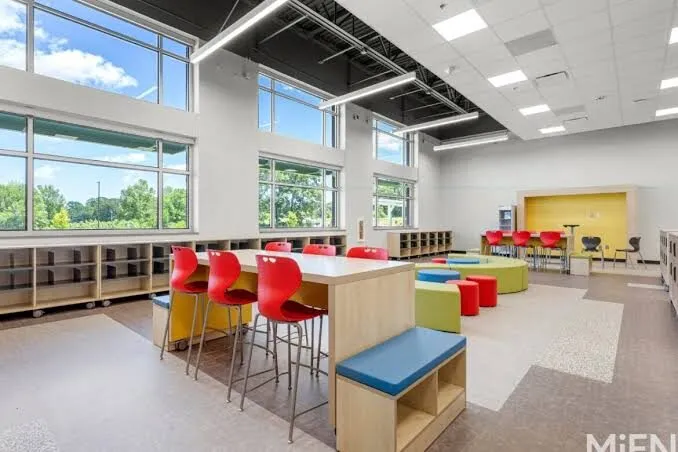
Foster Environmental Agency: Encourage children to design and alter their own learning environments—integrating natural elements, ergonomics, and quiet zones to match their current cognitive tasks.
Model the “Unlearn” Cycle: Let them see adults actively changing their minds or upgrading their skill sets when presented with new data. Normalize saying, “My old method doesn’t work for this new problem, so let’s build a better one.”
The Takeaway: We cannot predict the exact challenges Generation Alpha will face by the 2030s and 2040s. The most profound gift we can offer them is not a map of the world as it exists today, but a finely tuned compass for navigating a world yet to be built.